WINGED WONDERS OF UTTARAKHAND
My interest to visit Sattal, Chopta and Mandal was fuelled during my visit to Bharatpur in 2019, by a fellow birder, who told me what those places were known for! A habitual haunt of the winged wonders! Since then, my desire to visit Uttarakhand has grown manifold.
The landscape of Uttarakhand complements the avian diversity of the region. Marked by its snow-capped majestic mountains, lush forests, verdant valleys and meandering rivers like Alaknanda, Bhageerathi, and the mighty Ganga, along with its tributaries, Uttarakhand facilitates a thriving avifaunal diversity. Besides the colourful local birds, the migratory birds too have helped the place make it to the bucket list of photographers.
I learnt that the myriad species of birds that visit these places, can be properly photographed, only with a thrice-a-year trip. November-December would be the first, February-March, the second, and May-June, the third. The biodiversity and ecological amplitude of these places, draw 250+ species of native and migratory birds during these months.
The right opportunity for my visit knocked on my door in the month of November, 2022, when I came to know about Mr. Rohit Nayal, a tour operator and an efficient birder himself. But I could embark on the journey only in 2023, due to work commitments. Three of my friends who shared my zeal for birding photography, joined me.
Rohit is a tour operator by profession, and an excellent birder, with an acute knowledge of the birds and their behaviour. We were glad to have him as our tour guide.
We decided to fly to Delhi and take a train from there to Haridwar. It was noon on the third week of November, by the time we reached Haridwar railway station. The first day of our trip! We checked in a hotel in Rishikesh. The evening Aarthi at the banks of river Ganga was a humbling and exhilarating experience all at once!
Worship to us Indians is basically gratitude for all that we receive from Nature. We find divinity in the Elements. Water is our elixir. Hence, we worship all water bodies that feed us. River Ganga is one such major rivers that enrich our lives. Fire, we believe, is a purifier, and is included in our prayers as that which purifies our souls and is looked upon as an intermediary between the Almighty and us. Aarthi is a religious ritual, where fire, in the form of lighted camphor is shown to the waters of the Ganga as a mark of respect and devotion.
The Ganga Aarthi is held at Haridwar, Rishikesh and Varanasi. We were at Rishikesh. The sky above the banks of the river Ganga remains lit bright by the Aarthi lights, long after the sunset! The vibrant colours that reflect the fervent devotion of the people gathered, the lights that brighten up every face intently focussed on the event, are all a visual treat. Especially so, to a photographer!
It was a riot of colours. Every face exuding devotion and the excitement of being present there for the divine event, the bright coloured dresses of the priests, the intense moments, everything reflected in the lapping waters of the Ganga, all portrayed a spectacular scene.
Long after the intense, divine experience of the Aarthi, we took some time off for street photography, before we retired for the day. The exhilaration of having witnessed the grand expression of devotion, and the excitement of the next nine days of birding made it impossible for us to sleep. Gradually, exhaustion took over exhilaration, and we had some much-needed rest.
We headed the next day at 5 a.m., to Mandal in Chamoli district, by car. We crossed Devaprayag, the point where the rivers Alaknanda and Bhageerathi merge, and becomes the mighty Ganga! It was quite a sight to watch!
Was it the imposing Himalayas in the background or the general weather of the place, we don’t know, we felt chilled to the bone. Well-prepared for the altitudinal change, we had no challenge.
We went in search of local birds immediately after lunch, as the daylight wanes early in the evening, making photography difficult after 4:30 p.m.
Exploring Mandal continued the next day, and it was an amazing experience. Beautiful birds stunned us with their bewitching colours. A word of appreciation is due for our experienced guide Rohit Nayal. His intuitive ability to locate a bird hidden in the thicket, purely by its chirp, especially when the daylight was pretty low, is commendable.
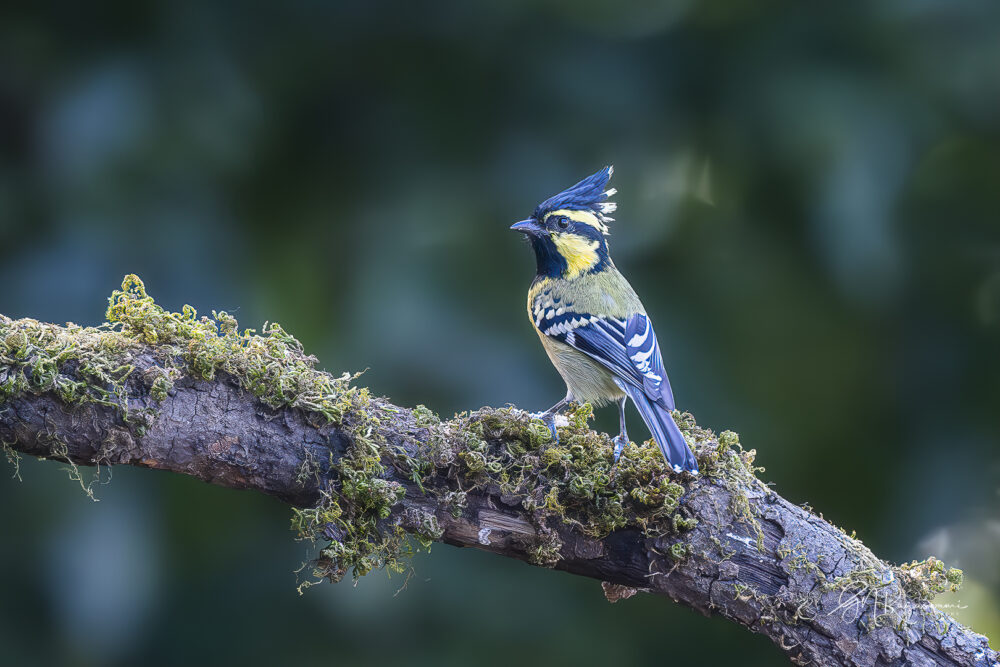
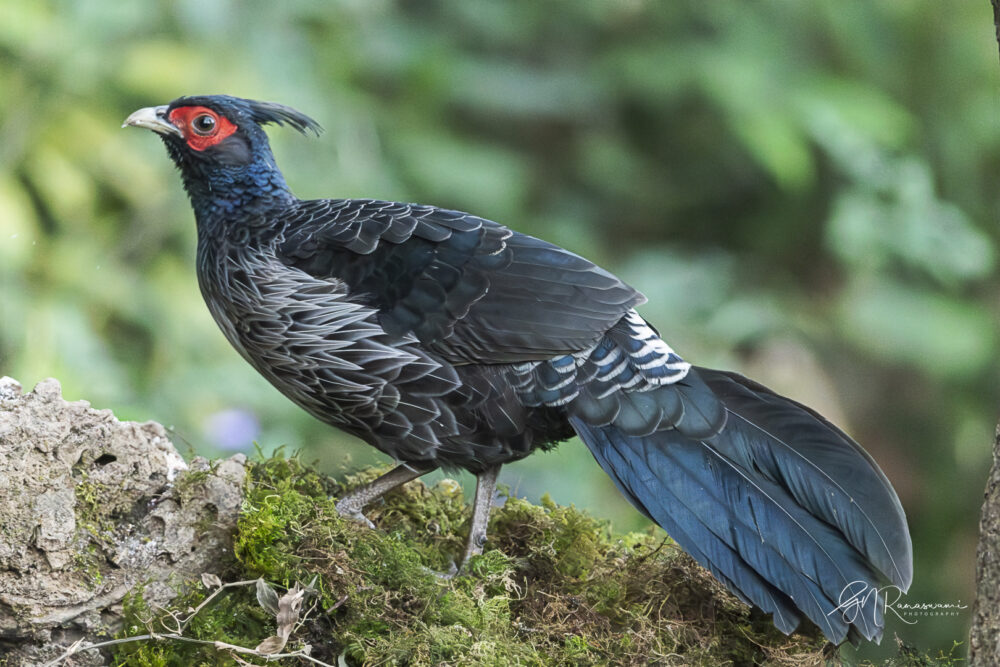
With his guidance and our effort, we were able to spot a wide range of tiny to mid-sized birds, like the laughing thrush, crested kingfisher, blue whistling thrush, cheer pheasant, red vented bulbul, to name a few. It was like the whole spectrum of colours came to life!
With a satisfying capture of the birds in Mandal, we were ready for the bird of the region. The Monal. It enjoys the status of being the state bird of Uttarakhand, and the national bird of Nepal.
We made Mandal our base and explored other places like Chopta, in the Rudraprayag district, from where many trekking trails originate. The next day would start early for us, to reach Thungnath before sunrise, to see the Monal. Our guide Rohit, informed us that the peak of Thungnath before sunrise will present a magical lighting for us to capture the bird better.
Though graded an easy trek when compared to other Himalayan treks, the Thungnath trek was a moderately difficult one, due to its altitude and steepness, and with our photographic gears! The thrill of sighting Monal saw us brave the exhaustive trek.
The Thungnath temple usually welcomes throngs of pilgrims. But the winter season we were there, saw the temple closed a week prior to our visit. Our unhindered time with the Monal!
The majestic white of the Himalayas in the background was a captivating backdrop to this colourful bird! The male Monal is a multi-coloured bird. It has a predominantly azure body with a splash of green and traces of deep yellow, a brown tail and black belly. It was a mesmerizing visual treat.
The Thungnath Shiva temple: Located at an altitude of 3,680 meters (12,073 feet) above sea level, it is the highest Shiva temple in the world and is situated just below the Chandrashila peak. The temple is believed to be at least 3000 years old and is the one of the Panch Kedar, the rest being Kedarnath, Madhmaheshwar, Rudranath and Kalpnath. The Panch Kedar enjoys a grand legend, relevant to the Pandavas.
We descended back to our base, with our hearts brimming with memories of those beautiful moments.
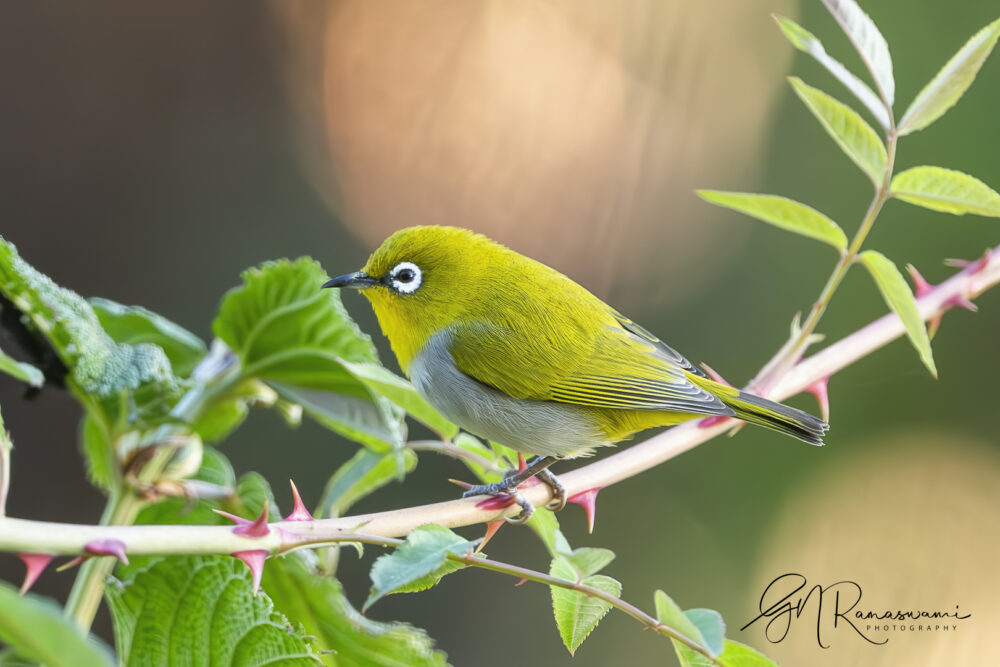
We stayed overnight in Ranikhet enroute Sattal. Its proximity to Nainital made it a must-see place for tourists, for its scenic beauty. The place offered us a good birding experience. We were lucky to have good sightings of native birds like yellow-billed blue magpie, blue whistling thrush, cheer pheasant along with few migratory birds. We reached Sattal for lunch.
The lower Himalayan ranges is where Sattal is located and is home to 7 interconnected freshwater lakes, Purna Tal, Ram Tal, Sita Tal, Laxman Tal, Nal Damayanti Tal, Sukh Tal, and Garud Tal. Hence the name Sãth Tãl - Seven Lakes. Nestled among the dense forests with these beautiful lakes, Sattal is paradise to a diverse species of migratory birds. We explored birding in Sattal through all 3 categories it offers. The Studio, the Trails and the Hides.
The Studio:
The road adjacent to Sattal lake or the Hanuman Tal, has a flight of uneven stairs leading down to a trail passing through a densely wooded area, to The Studio. A humble stretch of grassy land, where a small lake with seasonal streams around it, draws birds for its fresh water. Birds flying down from the tall trees to drink some water or for berries and insects, are a treat for us photographers. It is a true birders’ paradise.
The Trails:
The trails are for those who love the thrill of spotting the birds just by the chirp from the dense foliage! The birds camouflage themselves excellently in the thicket. Their quick jumps and turns when they are seated and their swift fly-bys make it difficult to be photographed. But then, that is the challenge!
The Hides:
Camouflaged well, not to disturb the birds, we wait for the action. The beautiful birds in various sizes and hues swoop down from the canopy to the water body, for a dip or a sip. The swift dips of the head, wings and the tail, shaking its tiny body, splashing water all around it, the testing peck of the ground for feed… a visual treat to the birders!
Finally, it was time for us to pack our bags. We left Sattal with a happy heart and a camera full of mesmerizing memories of the stunning place. We were fortunate to sight more than 100 beautiful native and winter migratory birds of the Himalayan region. Most of them we clicked were lifers for all of us!
Uttarakhand would retain its position in my bucket list of places to visit! I will grab at the next opportunity to visit this place. Every time!