MESMERISING MANGROVE – SUNDARBANS
It was April 2024 when I got to know about FIP’s proposal for a tour program to the Sundarbans National Park, scheduled for September end, 2024. A visit to the most beautiful mangrove forest, in the world’s largest delta formed by the confluence of the rivers, Ganga, Brahmaputra and Meghna! I didn’t want to let it pass, and so, registered my participation immediately. The group awaiting the excitement of this expedition, along with me, comprised of two of my friends from my photography club and three other photographers from West Bengal.
The Sundarbans is located 120 kms away from the Netaji Subhash Chandra Bose International Airport. A 3-hour drive by car from there, would take us to the boat jetty, from where a boat would take us to the mangrove.
‘Sundar’ means beautiful. And ‘ban’ or ‘van’ is forest. As the name suggests, it is one of the most beautiful mangrove forests, sprawling across 10,000 square kilometers of land and water. Sundarbans is a large estuary and mangrove forest, spanning from river Baleswar in Bangladesh to river Hooghly in India, along the coastline of both the countries. It is home to Panthera Tigris Tigris, the famed Royal Bengal tiger, and to a diverse variety of avian species.
We were told that the expedition would be from 5 a.m. to 5 p.m. Unlike the mainland, the mangrove would be cloaked in darkness by 5:30 p.m. We were to screen and shoot the animals and the birds only from the boat, within this available time span. The sway of the boat posed quite a challenge to us, photographers.
Day 1 and day 2 were rough due to the cyclone that hit West Bengal. Yet, our boatman and our guide were well-experienced to help us spot the birds. We were also kept nourished by the delicious breakfast, lunch and dinner prepared in the boat’s kitchen.
The big cat evaded us on the first two days. We were informed by our guide that on day 3, we would sail the boat into the core tiger area, where tourists in another boat had spotted a tiger, the previous day. We went straight to the spot. But no luck till noon.
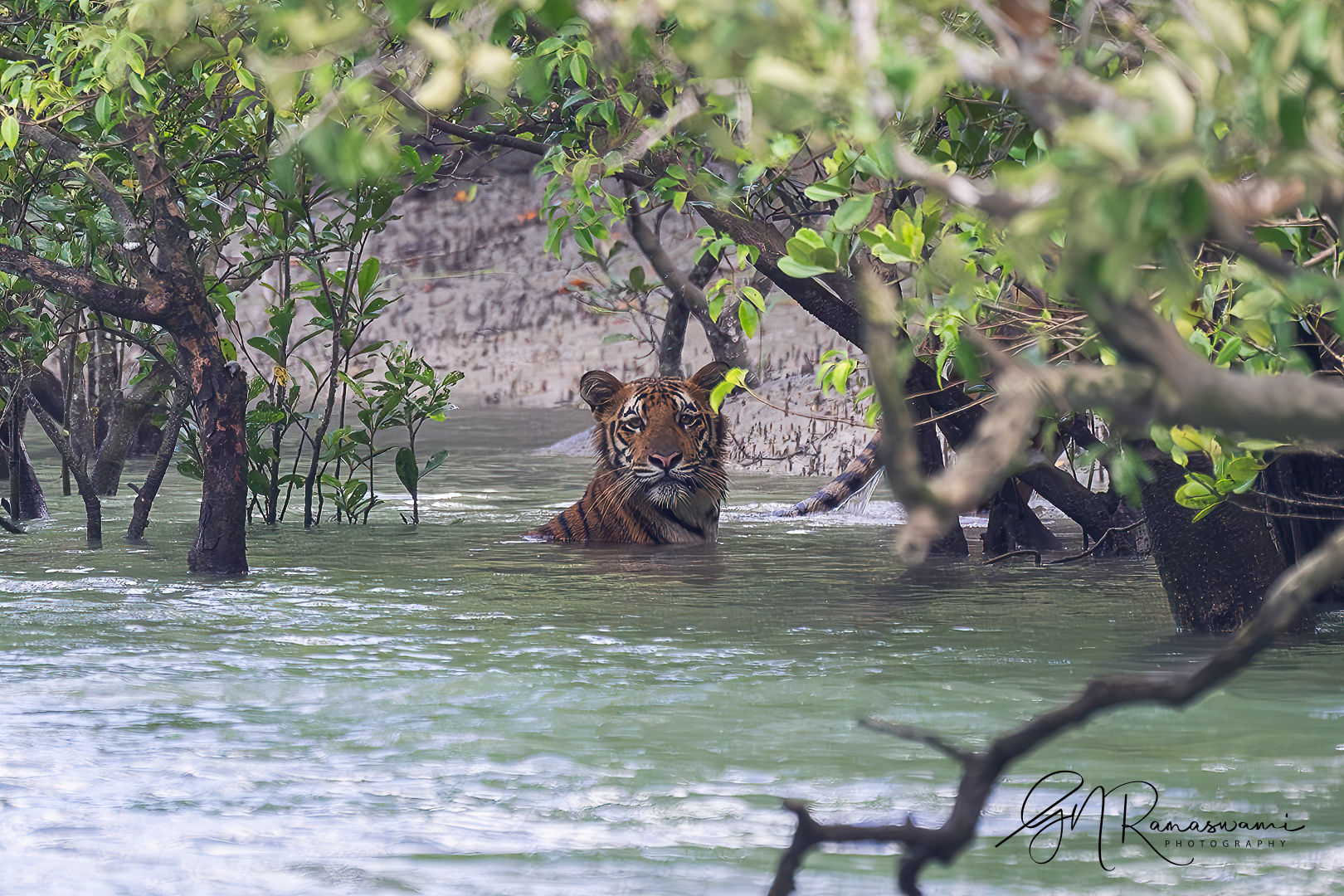
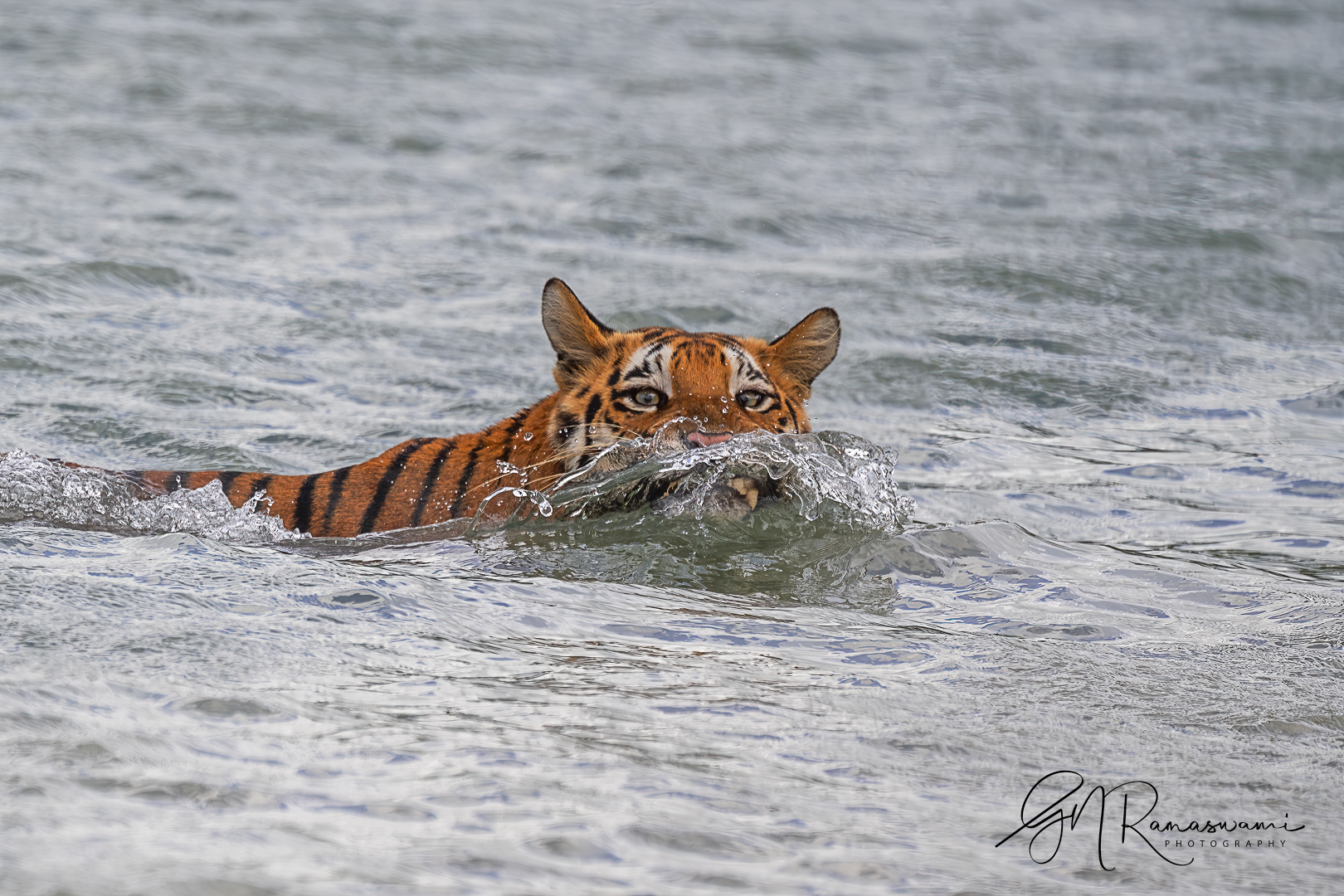
A sudden flurry of activity in the boat indicated that our boatman and our guide had spotted a tiger! Our guide pointed to a direction deep in the forest and asked us to take position. The tiger was expected to cross the river near us. Wow! The palpable excitement was electrifying! From nowhere, the big cat entered the water and started swimming to the other end, not alone! It was a tigress with her cubs! Tigress Phuleshwari! The excitement around the several boats was understandable. Unfortunately, our view was hindered by another boat, and we lost the opportunity to get a good close-up angle. But we managed to get a few clean shots.
We had to wait for a good two hours for our ill-luck to change. Our disappointment was soon replaced by the same excitement we felt earlier. Yes! We saw Phuleshwari, alone this time, enter the water again to swim back to the other end! She took less than 2 minutes to swim across the vast 200+ meters distance. We took complete advantage of the entire 2 minutes the tigress jumped and swam in the river until she walked out of the water and entered the deep forest. Thanks to our boatman and our guide, who took us to the location at the right time.
The state government’s commendable initiation towards conservation of the big cats has resulted in the increased tiger population in the mangrove. But they remain deep in the forest. The government has restricted free entry beyond a point. Hence, spotting the tigers near the banks within our access area, is rare. The main attraction among the big cats, is the beautiful tigress Phuleshwari, fondly named so by the locals.
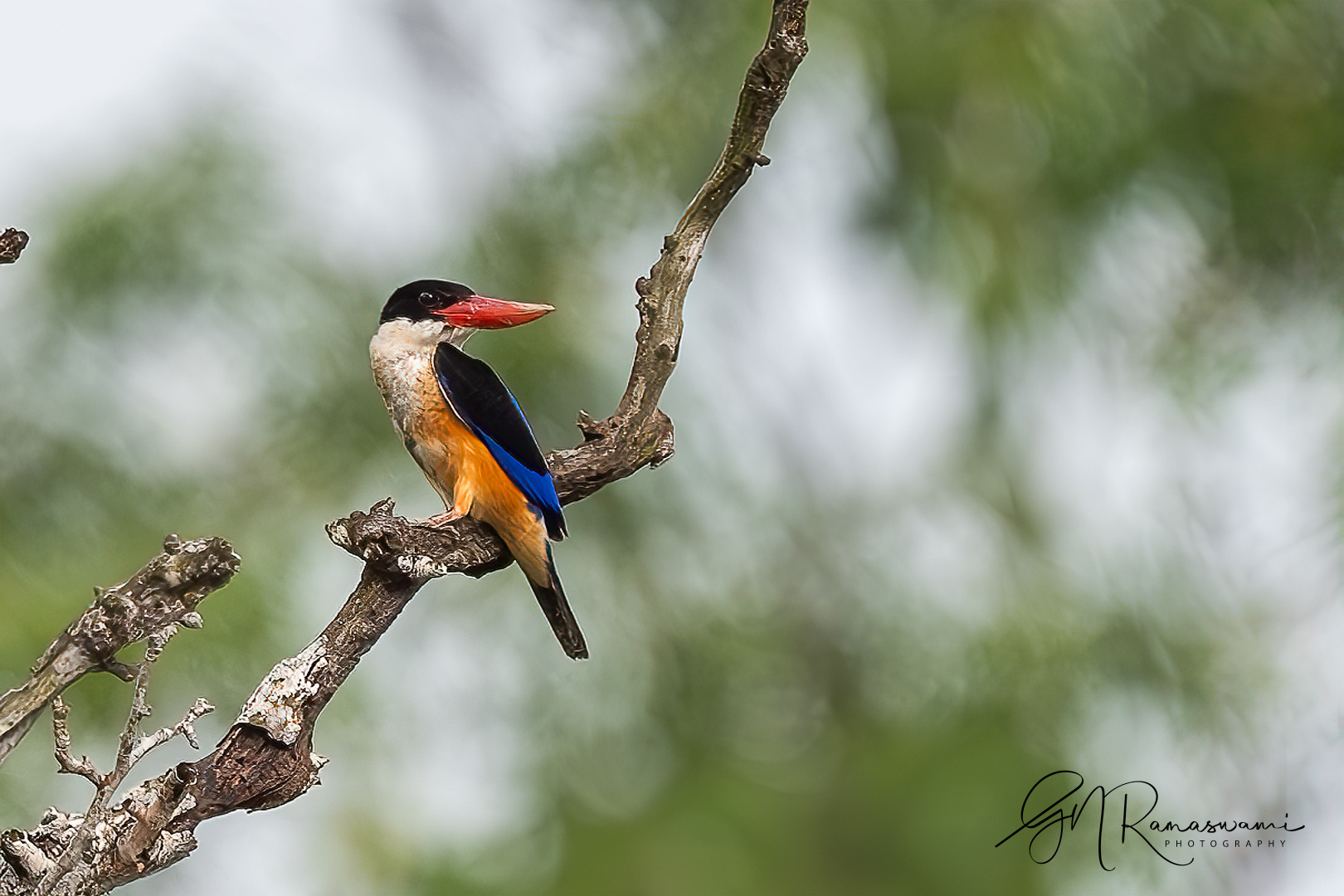
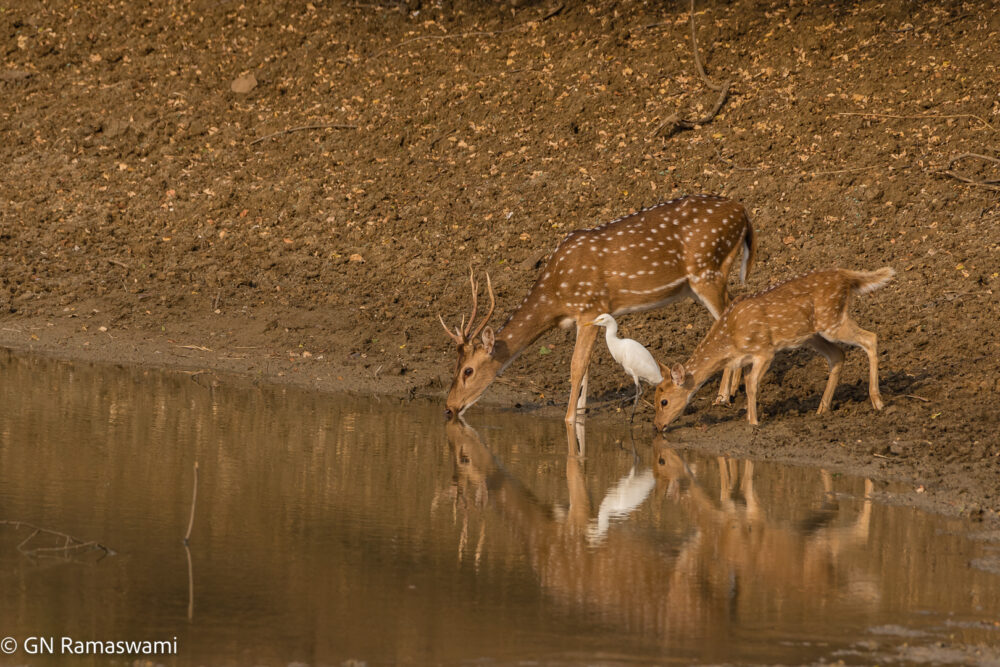
We were fortunate to capture in our lenses, birds like Collared Kingfisher, Common Kingfisher, Brown Winged Kingfisher, Pied Kingfisher, Black Capped Kingfisher, White Throated Kingfisher, Barn Owl, Egrets and Cranes, the amphibious fish Mudskipper, Gangetic Dolphin, Saltwater Crocodile, Deer, etc., in addition to the Royal Bengal Tiger.
I would like to thank Mr.Santhosh Jana, for his meticulous organization of this trip to make our stay comfortable. A special thanks to our guide Mr. Bikramaditya Mandal and our boatman Sridam Gayen, who were our eyes and ears in our quest to capture the beauties in our cameras.
It was a wonderful experience to capture the animals and birds from a swaying boat, with my fellow photographers who made this trip memorable.
Sundarban Stats:
- World’s largest area of mangrove forests.
- 10,000 square kilometres in size.
- Home to many rare and endangered species.
- Unique ecosystem.
- UNESCO World Heritage site since 1987.